

Cloud computing is the broad field of delivering and using computing services over the internet, while cloud engineering is the hands-on discipline of building, automating, and running those systems. In short, cloud computing is what you use, and cloud engineering is how it gets built. The two overlap heavily, and cloud engineering is best understood as a specialised, more advanced layer on top of cloud computing.
Key Takeaways
- Cloud computing is about understanding and using cloud services; cloud engineering is about building, automating, and operating them.
- Cloud engineering is the deeper, more advanced path, adding tools like Docker, Terraform, and CI/CD on top of cloud foundations.
- You do not have to choose blindly. Cloud computing is the natural starting point, and cloud engineering builds directly on it.

Table of Contents
The core difference at a glance: Cloud Computing vs Cloud Engineering
The fastest way to see how the two compare is side by side. The table below breaks them down across the dimensions that matter when you are choosing a path or a course.
| Dimension | Cloud computing | Cloud engineering |
|---|---|---|
| Main focus | Understanding and using cloud services | Building, automating, and running cloud systems |
| What you learn | Amazon Web Services (AWS) core services, Linux, networking, security, databases | All of that, plus Docker, Terraform, CI/CD, and orchestration |
| Time to job-ready | Shorter and foundational, around 23 weeks full-time | Longer and more advanced, around 42 weeks full-time |
| Key certifications | Linux Essentials, AWS Certified Cloud Practitioner, PCEP, AWS AI Practitioner | The same core, plus the AWS Solutions Architect Associate; the AI Practitioner is taken during the course |
| Typical roles | Cloud Support Engineer, junior cloud roles | Cloud Engineer, DevOps Engineer, Cloud Architect |
| Typical salary in Germany | Entry cloud roles, around €45,000 to €58,000 | Cloud engineers, €65,000 to €85,000 and up |
| Mindset | Learn the platform and its services | Automate and engineer reliable systems on it |
Why they are different
Cloud computing is the foundation. It covers the concepts and the core services: how computing, storage, networking, and databases are delivered over the internet, and how to use a platform like AWS to run software without owning physical hardware. Someone with cloud computing skills understands the building blocks and can work confidently with cloud services.
Cloud engineering takes those foundations and adds an engineering layer. Instead of only using cloud services, a cloud engineer designs and automates entire systems: packaging applications in containers with Docker, defining infrastructure as code with Terraform, and shipping software through automated CI/CD pipelines. The focus shifts from knowing the platform to building reliable, repeatable, production-grade systems on it.
That is why the two are not really rivals. Cloud engineering includes cloud computing and goes further. The question is rarely which one is correct, but how far along that path you want to go.
Why pick one over the other
The right choice depends on your goals, your starting point, and how much time you can commit.
Choose a cloud computing path if you are newer to tech and want the most direct route into a first cloud role. It gives you the core AWS skills and the AWS Certified Cloud Practitioner, the most recognised entry-level credential, in a shorter timeframe. It is ideal if you are aiming for roles like Cloud Support Engineer, or if you work in IT, operations, or business and want solid cloud fundamentals.
Choose a cloud engineering path if you want the deeper, more technical skill set and are aiming for roles like Cloud Engineer or DevOps Engineer. You will still learn the cloud computing foundations, then go further into automation, infrastructure as code, and container orchestration. It asks for a longer commitment, but it opens higher-paying, more specialised roles.
A common and realistic route is to start in cloud computing, enter the job market in a support or junior role, and grow into cloud engineering with experience. You do not have to learn everything before your first job.
Why cloud skills are in high demand in Germany
Demand for cloud talent in Germany is rising fast, and 2026 added a new driver. In January 2026, AWS opened its European Sovereign Cloud, a physically and logically separate cloud region in Brandenburg, backed by a €7.8 billion investment and built to meet strict EU rules such as GDPR and NIS2. For cloud professionals, this means growing demand for people who can not only build cloud systems but also run them in line with European compliance and governance. Cloud engineering skills, paired with that sovereignty awareness, are becoming especially valuable in the German market.

How this maps to WBS CODING SCHOOL Courses
As an AWS Partner, WBS CODING SCHOOL offers two fully remote, instructor-led routes that line up neatly with this distinction, so you can self-select based on how far you want to go.
The AWS Cloud Computing & AI Course is the foundational route. Over around 23 weeks full-time, it takes you from AWS core concepts, Linux, networking, and security through to AWS architecture, with the Linux Essentials and AWS Certified Cloud Practitioner certifications included. It is built for a fast, credible entry into cloud roles.
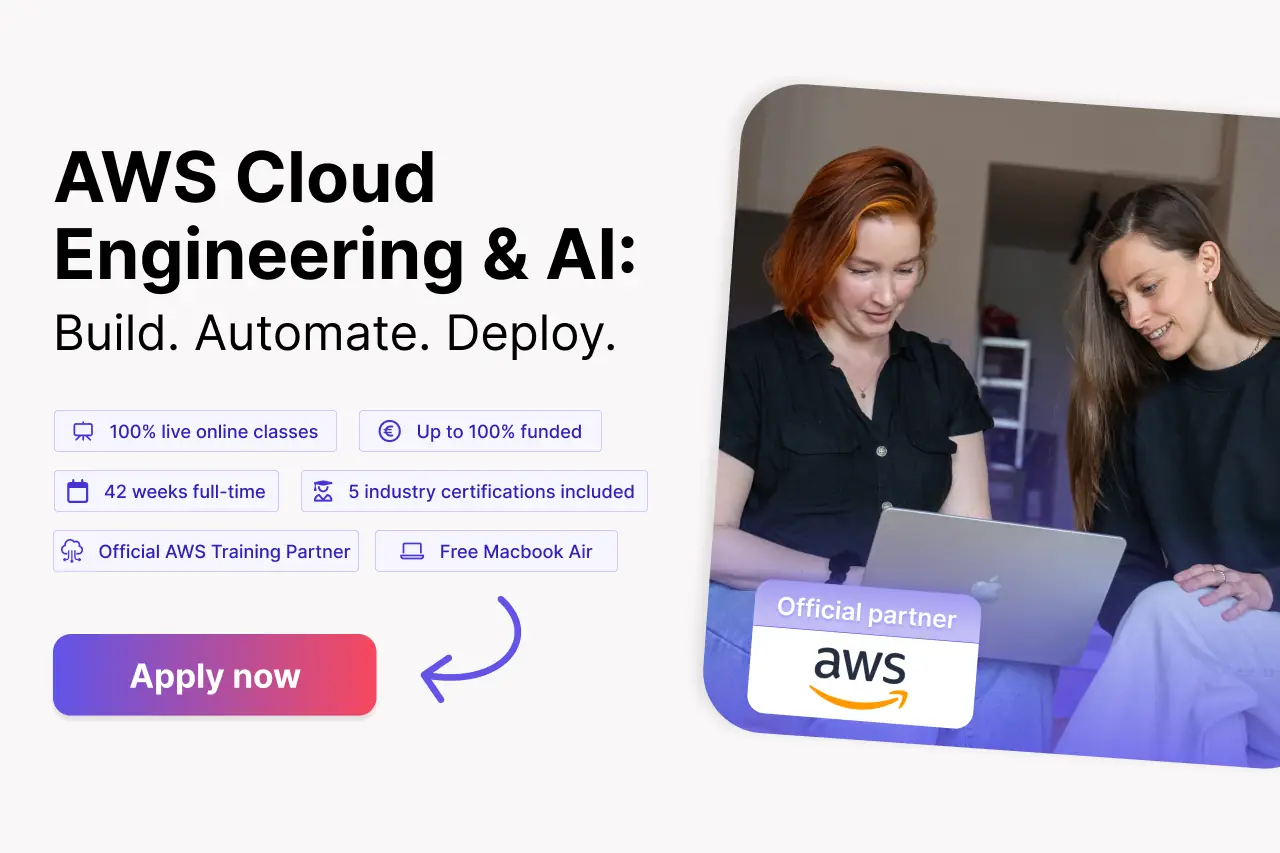
The AWS Cloud Engineering & AI Course is the advanced route. It begins with the same cloud computing foundation, then continues into the full engineering layer: Docker, Kubernetes, Terraform, CI/CD, container orchestration, DevOps automation, AI-assisted coding with Claude Code, and applied AI on AWS, ending in a large final project, over around 42 weeks full-time. It includes five industry-recognised certifications (among them the AWS Certified AI Practitioner and the AWS Certified Solutions Architect – Associate) and a MacBook Air you keep after graduation, and is built for people who want to work as cloud or DevOps engineers.
Both Courses are designed for re-skilling, up-skilling, and beginners, and both can be funded through a Bildungsgutschein for eligible jobseekers. If you are still deciding, our pillar guide on what cloud engineering is is a good next read.
Frequently asked questions
Is cloud computing or cloud engineering better?
Neither is better; they suit different goals. Cloud computing is the better starting point if you want a faster, foundational route into a first cloud role. Cloud engineering is the better fit if you want the deeper, more technical skill set and are aiming for cloud or DevOps engineering roles. Because cloud engineering builds on cloud computing, the two are a sequence more than a rivalry.
Should I learn cloud computing before cloud engineering?
Yes, in practice you learn cloud computing first, because cloud engineering builds directly on it. You need to understand AWS core services, Linux, and networking before you can automate and engineer systems on top of them. Good cloud engineering courses include the cloud computing foundations, so you are not learning them separately.
Which pays more, cloud computing or cloud engineering?
Cloud engineering roles generally pay more, because they require deeper automation and infrastructure skills. Entry-level cloud roles in Germany typically start around €45,000 to €58,000, while experienced cloud engineers earn €85,000 or more (Glassdoor and jobvector, 2026). Salaries rise as you move from using cloud services to engineering them.
Can I move from cloud computing to cloud engineering?
Yes, and it is a common career path. Many people start in a cloud support or junior cloud role with cloud computing skills, then build automation, containers, and infrastructure-as-code experience to move into cloud engineering. Certifications like the AWS Solutions Architect Associate help signal that progression to employers.